
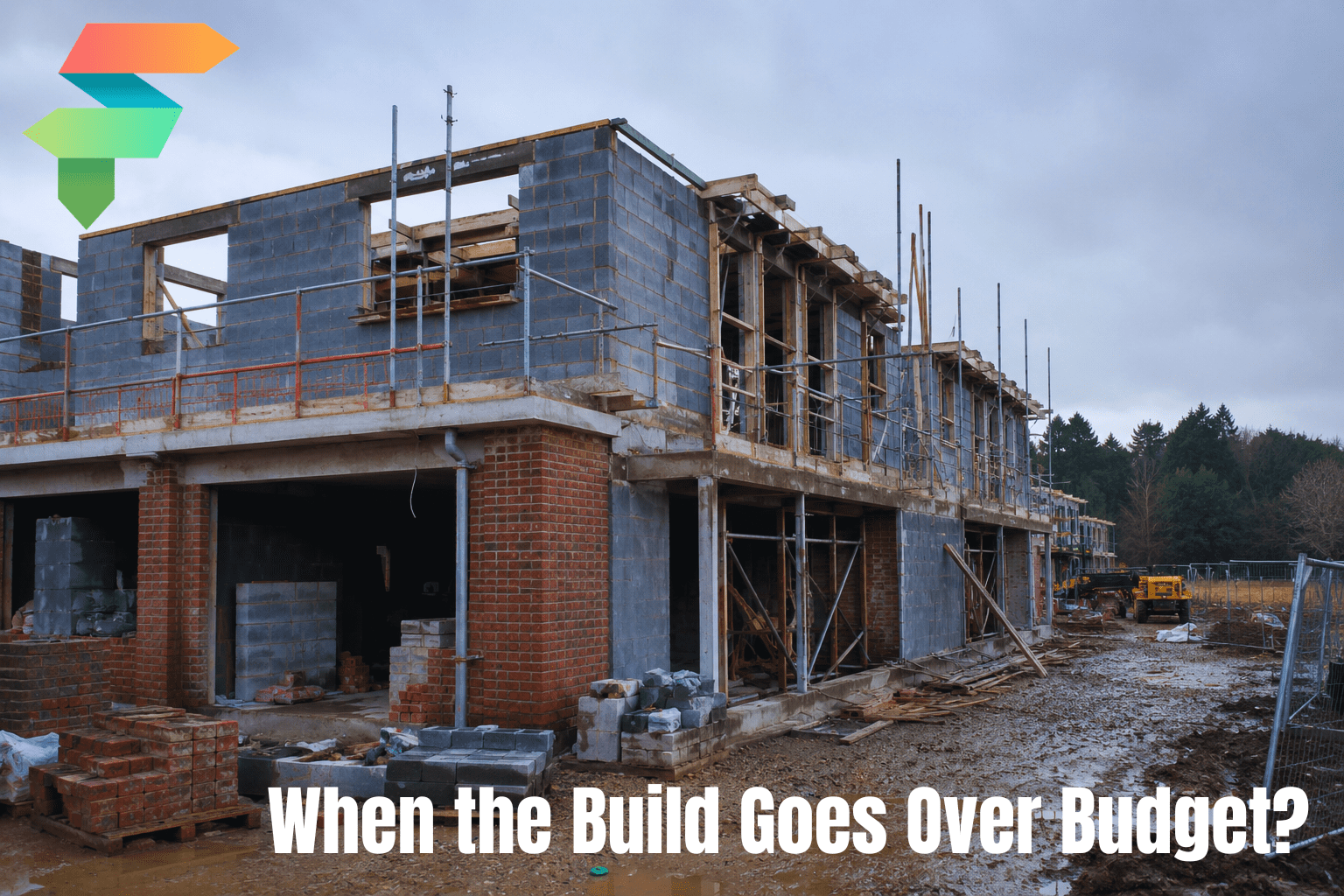
Every property developer starts with a sensible budget, a realistic timeline and a plan that feels achievable at the outset. Then the reality of development kicks in, and things rarely unfold exactly as expected.
Material costs rise unexpectedly. Groundworks take longer than planned. Contractors get delayed. Older buildings reveal problems nobody could fully anticipate until work begins. A project that looked comfortably funded on day one can start putting pressure on cashflow halfway through the build.
That is where flexible property development finance earns its place. Used properly, it helps developers deal with the real-world messiness of a build, not just the neat version that appears in the first spreadsheet.
The truth is, this happens more often than many people realise. Experienced developers know that managing change, adapting quickly and having the right funding behind them can be the difference between a project stalling and one that keeps moving despite the bumps along the way.
The earlier you engage a trusted finance professional, the more easily your scheme can be structured to match both lender expectations and market reality. At FundingRound, many of our conversations with developers help shape their lending requirements, including a realistic contingency. That figure is typically 10% as a minimum, though it can rise depending on the land condition or the state of buildings earmarked for refurbishment.
That said, plenty of developers come to us once costs have already started to overrun. The project is still viable. The site is still moving. They simply need a bit more flexibility to keep momentum going.
Why Projects Go Over Budget
In most cases it is not one catastrophic issue that causes the problem. More often it is a combination of smaller pressures building over time until cashflow starts to tighten.
Material prices shift midway through a job. Labour availability changes. Poor weather creates delays that quietly add to both site costs and finance costs week by week. On refurbishment projects, particularly older buildings, hidden structural issues, wiring problems, roofing defects or asbestos can create expense that simply was not visible at the start.
Even experienced developers with well-run projects can find themselves needing extra flexibility as a scheme progresses, especially when timelines slip or costs creep beyond the original projections. It rarely means anyone made a bad decision. Sometimes the project has just moved on from the version that existed on day one.
How Property Development Finance Helps When Cashflow Tightens
This is often the point where timing becomes critical. The build may already be well underway, contractors still need paying, and the development itself remains viable. Traditional lenders, though, can sometimes move too slowly when a decision is needed quickly.
Delays in securing extra funding pile more pressure on both the project and its profitability, which is why access to specialist property development finance can be so valuable at this stage. Rather than relying on a single lender's criteria, we work across the wider lending market to find solutions that fit the actual circumstances of the project.
Sometimes that means restructuring an existing facility. In other cases it means introducing additional development funding, bridging finance or exit finance to protect the scheme and see it through to completion.
The important point is that these options are not interchangeable. Bridging finance, for example, is a short-term solution that can suit situations where speed or a clear exit route matters. It is not a catch-all fix for every development that has gone over budget. Development finance is generally built around construction, heavy refurbishment or ground-up schemes, while bridging is shorter term and usually tied to a specific exit such as a sale or refinance.
So the better question is rarely "can bridging fix this?" It is "what does this project actually need now, and what will a lender realistically support?" That is a very different conversation.
A Lincolnshire Development Example
A good example is a FundingRound case study involving an established residential developer in Lincolnshire.
The client was working on the first phase of a six-house development with a gross development value of around £2 million. The funding needed a more tailored approach than many mainstream lenders were comfortable offering. The developer had strong sector experience, but the structure of the land purchase and the level of borrowing involved meant careful planning and lender selection mattered throughout.
We worked alongside them from the outset, helping structure the proposal, model different phasing options, compare lender appetite and manage the valuation and monitoring through to completion. That may sound like the behind-the-scenes admin of finance, but it is often where a deal becomes stronger.
A lender does not just look at the headline value of the finished scheme. They want to understand the project, the borrower, the timing, the risks and the exit. In this case the outcome was a structure that enabled the land acquisition, supported the project with confidence and built in the comfort of contingency to cover realistic unforeseen costs.
The Importance of Exit Strategy and Flexibility
One of the biggest misconceptions in development finance is that finishing the build automatically solves every problem. In reality, market conditions still play a huge part in how well the project performs.
If sales slow, developers can feel pushed into selling too quickly or accepting lower offers just to reduce finance costs, even when waiting a little longer might produce a stronger result. Development exit finance can create breathing space here. It typically replaces more expensive development funding with a cheaper short-term facility once the development risk has passed, giving developers time to market and sell properly rather than rushing decisions under pressure.
As with everything, the details matter. The suitability of exit finance depends on the finished scheme, the remaining debt, the sales route and the lender's criteria. It works best as part of the wider funding plan, not an afterthought once pressure has already built. Different situations call for different solutions, which is why understanding the wider funding picture, and having experienced guidance through it, makes decision-making far less stressful.
Keeping Projects Moving
Going over budget can feel stressful, particularly when costs are rising and timelines are tight. But it is one of the more common realities in the sector, and not a sign that a project cannot still succeed.
The developers who navigate it best are rarely the ones who avoid every challenge. They are usually the ones who act early, seek advice quickly and get the right funding structure in place before delays become harder and more expensive to manage.
At FundingRound, we focus on practical conversations, straightforward advice and helping developers understand the property development finance options open to them. If your project is starting to feel the pressure on costs or cashflow, talking to the right people early can open up solutions that keep the build moving while protecting the long-term viability of the scheme.
Not every project needs a dramatic restructure. Sometimes it just needs a clearer plan, a better lender fit or a more realistic route through the next stage. Either way, the earlier the conversation, the better.
FAQs
How do I get a loan for property development? The right solution depends on the size of the project, the timescales, your experience, the projected costs and the exit strategy. Preparation matters, because lenders want to understand both the viability of the scheme and the strength of the structure behind it. An experienced broker can help make sure the funding fits the realities of the project rather than just the headline numbers.
What is the difference between bridging finance and development finance? Development finance is generally designed for larger renovations or ground-up construction. Bridging finance suits shorter-term needs, lighter refurbishments or situations where speed is the priority. The most suitable option always depends on the stage, structure and objectives of the individual project.